
Stop Procrastinating Now: Discover the ‘1-2-3 Method’ That Will Skyrocket Your Productivity
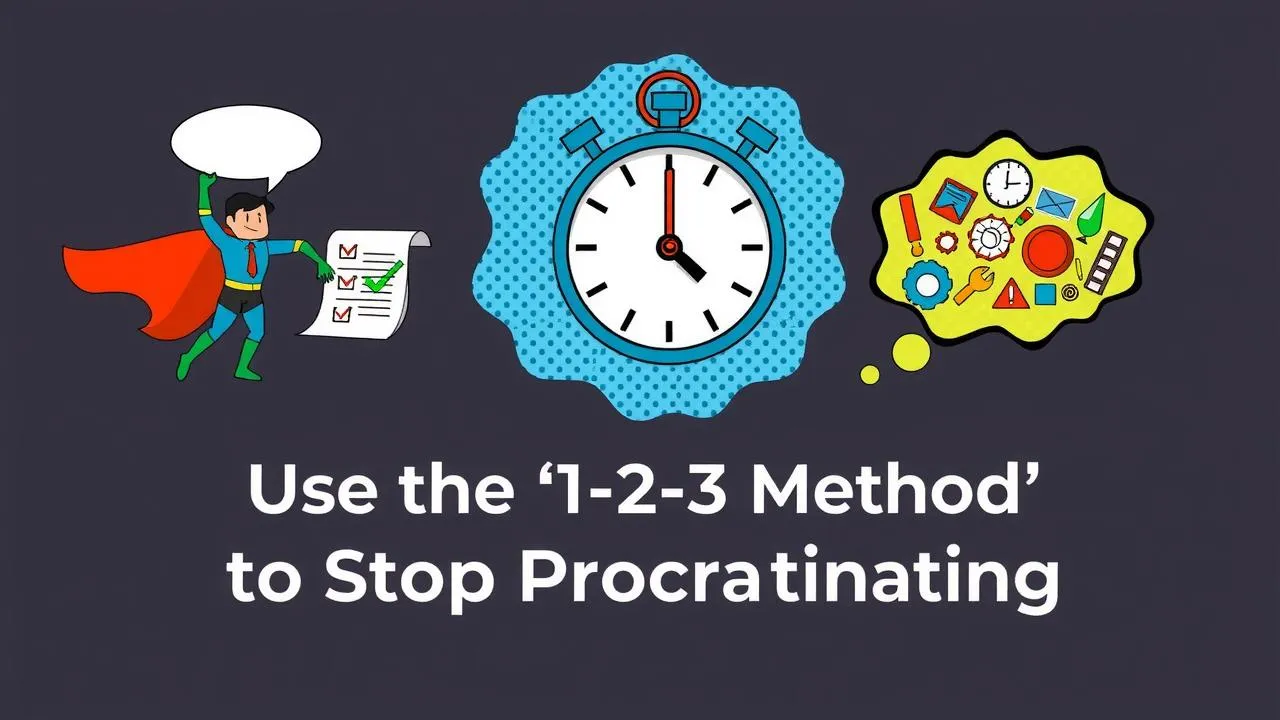
Many people face procrastination, often stemming from fears or a lack of motivation.
Understanding these triggers helps in overcoming the habit.
The 1-2-3 Method offers an easy way to tackle procrastination by simplifying tasks into manageable steps. First, identify the task you’ve been putting off and clearly define what needs to be done.
Next, break it down into three smaller actions; this makes it less daunting.
Finally, take action right away!
Start with the first step for 10-15 minutes and focus on it alone.
This method boosts motivation and creates positive momentum for future tasks.

- Audible Audiobook
Last update on 2026-10-05 / Affiliate links / Images from Amazon Product Advertising API
Understanding Procrastination

Procrastination often stems from various emotional and psychological factors.
Many people delay tasks because they fear the outcome, worrying about failing to meet their or others’ expectations.
This fear can paralyze decision-making, leading to a cycle of avoidance.
Perfectionism plays a similar role; individuals may hold off on starting a task because they feel it must be done perfectly, which can prevent them from even beginning.
Additionally, lacking motivation can lead to procrastination, especially if the task feels overwhelming or uninteresting.
Recognizing these triggers is essential.
For example, if you consistently put off tasks that require creativity, it might be because you fear not being good enough.
By identifying and acknowledging these patterns, you can better manage procrastination and develop strategies to address the underlying issues.
What is the 1-2-3 Method?
The 1-2-3 Method is a simple yet effective approach designed to help individuals overcome procrastination.
It focuses on breaking tasks into smaller, manageable steps, making them less daunting.
By structuring a task into three distinct steps, you create a clear pathway to follow, encouraging immediate action.
For example, if you’re avoiding cleaning your room, instead of seeing it as one big chore, you can break it down into three steps: picking up clothes, dusting surfaces, and vacuuming the floor.
This structured breakdown lets you focus on one small part at a time, making starting easier.
The beauty of the 1-2-3 Method lies in its accessibility; anyone can use it, regardless of the complexity of their tasks.
How to Implement the 1-2-3 Method
To start with the 1-2-3 Method, first, you need to identify the task hanging over your head. It might be something daunting like writing a report or organizing your closet.
Once pinpoint the task, write down precisely what you want to achieve.
This helps clear your mind and sets a clear goal.
Next, break that task down into three smaller, manageable steps.
For example, if your task is to write a report, your steps could be:
1) Research the topic,
2) Create an outline,
3) Write the introduction. Make sure each step is specific enough that you know exactly what to do without feeling overwhelmed.
Finally, take action on the first step right away. Set a timer for 10-15 minutes and focus solely on that step. Don’t let distractions pull you away.
When the timer goes off, assess what you’ve done. If you’ve completed the first step, move on to the second.
Continue this process until you’ve tackled all three steps. This method helps you get started and builds momentum, making it easier to keep going.

Last update on 2026-10-05 / Affiliate links / Images from Amazon Product Advertising API
| Step | Description | Tips |
|---|---|---|
| Step 1 | Identify the Task: Choose a task you have avoided and clearly define what you need to accomplish. | This clarity will help you focus your efforts. |
| Step 2 | Break it Down: Divide the task into three smaller, actionable, specific, achievable steps. | This breakdown reduces the intimidation factor of the larger task. |
| Step 3 | Take Action: Start with the first step immediately, setting a timer for 10-15 minutes to focus solely on that step. | Continue to the next step upon completion until all are done. |
Benefits of the 1-2-3 Method
The 1-2-3 Method offers several benefits that can significantly improve your productivity. First, breaking tasks into smaller parts creates a clear pathway to completion.
For instance, if you’re dreading writing a report, instead of seeing it as one massive task, you can view it as three manageable steps: researching, drafting, and editing.
This clarity helps to reduce the overwhelming feelings often associated with larger projects.
Additionally, completing these smaller steps provides a sense of accomplishment.
Each time you finish a step, you gain a boost of motivation, propelling you to tackle the next one.
Imagine crossing off each step on your to-do list; that simple act can be gratifying.
Moreover, the method helps to alleviate anxiety.
The fear of starting a daunting task can often lead to procrastination, but with the 1-2-3 Method, you only focus on the next immediate step.
This shift in perspective lowers the pressure, making it easier to get started.
Finally, regularly practicing this method can build a productivity habit.
Over time, taking action becomes a natural response to tasks rather than a source of stress.
Essentially, the 1-2-3 Method helps you get things done and fosters a healthier relationship with your work.
Tips for Success with the 1-2-3 Method
Set realistic goals for each step to make the 1-2-3 Method work for you.
For instance, if your task is to write a report, your steps might include researching the topic, drafting an outline, and writing the introduction.
Each of these should feel doable.
After completing each step, reward yourself. A small treat or a break can boost your motivation and make the process enjoyable.
Consistency is key, so apply this method to various tasks, big or small. Don’t hesitate to adjust the steps if they feel too challenging or easy.
Finally, take time to reflect on your achievements.
Recognizing your progress helps maintain motivation and reinforces your commitment to overcoming procrastination.
- Break tasks into smaller, manageable steps.
- Set specific deadlines for each step.
- Prioritize tasks based on importance and urgency.
- Use reminders or alarms to stay on track.
- Reward yourself after completing each step.
- Create a designated workspace to minimize distractions.
- Reflect on your progress and adjust your methods as needed.

- Sold as box of 18
Last update on 2026-10-05 / Affiliate links / Images from Amazon Product Advertising API
Frequently Asked Questions
1. What is the ‘1-2-3 Method’ for overcoming procrastination?
The ‘1-2-3 Method’ is a simple strategy. It involves breaking your task into three steps: Identify a task, choose a small action to start with, and then take that action.
2. How can I use this method to start a big project?
To use the ‘1-2-3 Method’ for a big project, first, break down the project into simple parts. Then pick one small part to focus on and take just one small action related to that part.
3. Is this method effective for everyone, or only for some people?
The ‘1-2-3 Method’ can work for most people, but effectiveness may vary. It’s all about finding the right approach that clicks for you.
4. What should I do if I still feel stuck using this method?
If you feel stuck, try adjusting your steps. Maybe you can take an even smaller action or take a short break to regroup your thoughts.
5. Can I apply the ‘1-2-3 Method’ to daily tasks, not just big projects?
Absolutely! The ‘1-2-3 Method’ is excellent for daily tasks too. Identify a task, choose a small action, and go for it!
Procrastination is a common issue that can be tackled using the ‘1-2-3 Method.’ This method involves identifying a task, breaking it into three manageable steps, and taking immediate action on the first step. Benefits include boosted motivation, reduced anxiety, and improved productivity.
For success, set realistic goals for each step, reward yourself, and stay consistent. Commit to trying the ‘1-2-3 Method’ to gain control over your tasks and overcome procrastination.


