
Master Open-Mindedness: Transform Your Life by Embracing Different Perspectives Daily
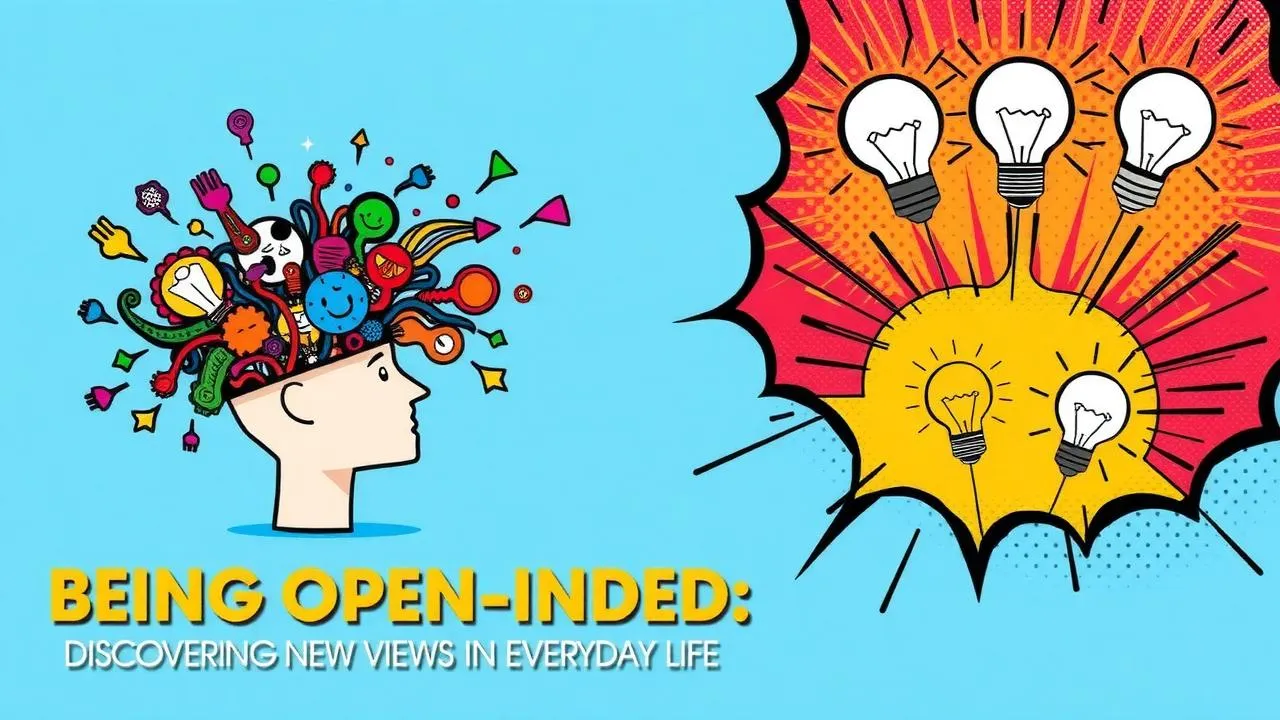
Being open-minded means being willing to explore different ideas and experiences without immediately rejecting them.
It’s about showing curiosity, empathy, and intellectual humility, recognizing that our own knowledge has limits.
Open-minded people don’t get defensive when their beliefs are challenged; instead, they see it as a chance to grow and learn.
This doesn’t mean accepting every idea out there, especially harmful ones, but trying to understand opposing views helps build respect and better decisions.
Openness also involves fighting biases like confirmation bias by seeking out information that may contradict what we think is true.
Overall, being open-minded strengthens relationships and promotes personal growth in daily life.

Last update on 2026-10-06 / Affiliate links / Images from Amazon Product Advertising API
What Open-Mindedness Really Means From Psychology

From a psychological perspective, open-mindedness is more than just being polite or tolerant.
It means genuinely being willing to consider different viewpoints and new experiences without rushing to judgment.
This openness isn’t about blindly accepting every idea, but about welcoming a range of arguments and information, even when they challenge what you currently believe.
Open-minded people actively seek out information that might contradict their views because they understand that learning and growth come from questioning their own assumptions.
They respect others’ right to hold different beliefs, even if they don’t agree with them. On the flip side, being close-minded involves rigid thinking and an unwillingness to entertain alternatives.
Open-mindedness also depends on empathy, which helps you understand how others feel, and curiosity, which drives you to explore unfamiliar ideas.
Intellectual humility plays a key role too: it means recognizing that your knowledge is limited and that you can always improve it.
Having strong beliefs doesn’t rule out being open-minded, as long as you remain willing to rethink those beliefs when presented with new evidence.
Importantly, being open-minded is not the same as accepting all views, especially those that could be harmful; it’s about understanding opposing views well enough to engage thoughtfully and constructively.
This mindset helps us focus on learning from discussions rather than just trying to win arguments, making conversations richer and more meaningful.
Traits That Define Open-Minded People

Open-minded people stand out because they genuinely want to understand others. They’re curious about different thoughts and experiences, not just waiting to share their own.
Instead of getting defensive when their views are challenged, they stay calm and thoughtful, seeing it as a chance to learn rather than a threat.
Empathy plays a big role; they can put themselves in someone else’s shoes and appreciate feelings and perspectives that differ from theirs.
They’re also aware that no one knows everything, including themselves, which keeps them humble and open to new information.
Respect is key for them; they express their beliefs clearly but without dismissing others. You’ll notice they listen carefully, focusing on what’s being said instead of planning their next argument or interrupting.
Flexibility is another trait: when new evidence comes along, they’re willing to adjust their views rather than cling stubbornly to old ideas.
Open-minded people tend to ask questions and explore alternative explanations, showing they want to dig deeper rather than accept things at face value.
This mix of curiosity, empathy, humility, respect, and flexibility makes open-mindedness not just an attitude but a way of engaging with the world around them.
| Trait | Description |
|---|---|
| Curiosity | Shows interest in others’ thoughts and experiences. |
| Acceptance of Challenge | Welcomes challenges to their views without anger or defensiveness. |
| Empathy | Understands and appreciates other people’s emotions and perspectives. |
| Intellectual Humility | Recognizes the limits of their own knowledge and expertise. |
| Openness to Opinions | Values hearing different and even opposing viewpoints. |
| Respectful Expression | Expresses beliefs without dismissing or disrespecting others. |
| Flexible Thinking | Adapts views when presented with new evidence. |
| Active Listening | Listens carefully without interrupting or planning rebuttals. |
| Calm Demeanor | Remains thoughtful and composed during disagreements. |
| Questioning Attitude | Asks questions and explores alternative explanations. |

- CRYSTAL ENERGY FOR EMOTIONAL HEALING: Each scented candle is thoughtfully embedded with a unique healing crystal—Citrine for joy, Red Crystal for laughter, Rose Quartz for love, and Red Agate for passion. Designed to uplift the spirit and align emotional energy, this Aromatherapy candle set offers a meaningful and luxurious way to embrace self-care and inner harmony. Perfect for those seeking a deeper candle experience beyond fragrance
- NATURAL SOY CANDLES WITH 10% ESSENTIAL OILS: Our four carefully blended fragrances awaken the senses: zesty Orange & Grapefruit for Joy, fruity Cranberry & Dahlia for Laughter, romantic Rose & Jasmine for Love, and tropical Mango Smoothie for Passion. These clean, cozy aromas make this candle set ideal for cozy winter nights, holiday celebrations, or simply adding a joyful touch to your home
- LONG LASTING & CLEAN BURNING AROMATHERAPY: Each 6.5oz soy candle burns for approximately 40–50 hours, offering a total of up to 200 hours of energy fragrance. Paired with lead-free cotton wicks for a clean, even burn, this aromatherapy candle set is ideal for yoga, meditation, or simply unwinding during the cozy holiday season, ideal for bedrooms, bathrooms, meditation spaces, or living rooms. Whether you’re winding down after work or creating a relaxing bath ritual, these soy candles bring happiness and energy
- GIFT IDEAS FOR WOMEN: These crystal candles come beautifully boxed, making them perfect gifts for women, mom, wife, gifts for her, or thoughtful gifts for the one who love meditation, spirituality, or healing energy. Ideal for mother’s day gifts, birthday gifts, holiday gifts, wedding gifts, bridesmaid gifts, spa gifts, gifts for good friends…
- AOOVOO CANDLES: Provide the world with top-quality candles at half the price. Every step of our candle production is independently handled by AOOVOO, as we are dedicated to creating high-quality candles, allowing people worldwide to enjoy a premium lifestyle affordably. Our scented candles are crafted by professional perfumers, ensuring a delightful fragrance experience. If you have any questions, feel free to reach out. We’re committed to ensuring your satisfaction

Last update on 2026-10-06 / Affiliate links / Images from Amazon Product Advertising API
Factors That Shape Our Open-Mindedness

Several factors influence how open-minded a person is, starting with personality traits.
People who score high on openness to experience are naturally more willing to explore new ideas and perspectives.
Interestingly, genetics also plays a role, accounting for about 21% of the differences in openness between individuals.
However, expertise in a specific area can sometimes work against open-mindedness.
When someone becomes very knowledgeable, they might cling more tightly to what they know, making it harder to consider alternative viewpoints.
Another key factor is comfort with ambiguity.
If someone dislikes uncertainty or feels anxious when things are unclear, they tend to shut down new ideas rather than explore them.
Cognitive biases also shape open-mindedness.
Confirmation bias, for example, pushes people to favor information that supports their existing beliefs and dismiss opposing evidence.
Emotional attachments to beliefs can be just as powerful; when convictions are deeply tied to one’s identity or emotions, it becomes tougher to stay open to opposing views.
On top of that, mental fatigue can reduce our ability to think openly.
When tired, people often take mental shortcuts, which can mean ignoring or rejecting unfamiliar perspectives simply to conserve energy.
Education and varied life experiences offer a counterbalance by exposing people to different ways of thinking and encouraging curiosity.
Social environments matter too: places where questioning and respectful debate are welcomed help nurture open-mindedness.
Lastly, cultural and institutional influences shape how open people are to alternative views.
Societies that value free speech and diversity tend to produce individuals who are more open, whereas rigid cultural settings may discourage exploration of ideas that challenge the status quo.

- 🧠 WHAT IT’S FOR: Daily guided breathing to help calm & focus your mind during the day or promote a peaceful night sleep, improving overall wellness. Continued practice can help manage or reduce stress & anxiety in all ages and can help improve symptoms of depression. A simple & fun meditation tool that can also cultivate mindfulness to help you live in the present moment.
- 🧠 HOW TO USE IT – 3 easy to use breathing modes OR as a calming night light. Simply follow fade-in, fade-out color prompts that simulate the popular 4/7/8 ‘calming breath’, 5/5 ‘balance breath’, or 4/4/4/4 ‘box breathing’. Green Buddha – Inhale , Purple Buddha – Hold, Blue Buddha – Exhale. Lightly tap on surface to adjust brightness.
- 🧠 WHO IT’S FOR – adults & kids who might benefit from a gentle daily reminder to ‘pause & reset’; visual learners who might prefer guided open-eyed meditation (those who find closing eyes harder to focus); beginning to advanced Meditation practitioners; those interested in Mindfulness; Teachers, Students & Counselors.
- 🧠 WHERE TO USE IT – fits perfectly on desk or nightstand or wherever you might benefit from a reminder. Practice at home, work, school .. or as part of a relaxing wind down routine before bed.
- 🧠 FEATURES – 2 Brightness Levels | Premium soft & squishy Silicone | 3.5x4x6 inches (lwh) | Long Rechargeable Battery life = 2 months @ 10 min/day | Auto shut off after 3 hrs | NOT INCLUDED Features: No Sound, No Moving Parts, App-Free Experience, No Manual Timer.
Last update on 2026-10-06 / Affiliate links / Images from Amazon Product Advertising API
How Being Open-Minded Benefits Your Life
Being open-minded helps you see the world and yourself in new ways by exposing you to fresh ideas and experiences. When you’re open to trying new things, you learn and grow, which makes it easier to adapt and rethink old beliefs.
This flexibility isn’t just good for personal growth; it also builds mental resilience, helping you bounce back from challenges with a positive attitude.
Open-minded people tend to make better decisions because they consider different viewpoints and gather more information before settling on a choice.
In relationships, being open-minded promotes empathy and clearer communication, making it easier to understand others and resolve conflicts.
Especially in divided communities, open-mindedness acts like a bridge, helping people find common ground despite differing opinions.
It also protects you from getting stuck in narrow beliefs or falling for misinformation by encouraging curiosity and a continuous desire to learn.
For example, someone open to hearing opposing political views might discover shared values they hadn’t noticed before, which can lead to more respectful conversations and less tension.
Overall, open-mindedness keeps your mind fresh and motivated, helping you navigate life with optimism and a willingness to grow.
Ways to Develop a More Open Mind

One of the first steps to becoming more open-minded is learning to recognize and set aside snap judgments about people and ideas.
Instead of reacting immediately, give yourself a moment to consider the bigger picture.
It’s also important to admit when you’re wrong or don’t have all the answers; this kind of intellectual humility creates space for growth.
Be aware of confirmation bias, the tendency to favor information that supports what we already believe.
Actively seeking out opposing viewpoints can challenge your assumptions and expand your perspective.
When you come across new information, don’t accept it blindly; critically evaluate the credibility of your sources.
Asking yourself reflective questions, such as why you hold certain beliefs or how you might be biased, helps deepen your understanding.
In conversations, try to pause and think before responding to avoid defensive reactions that close off dialogue. Embracing uncertainty and tolerating ambiguity allows you to sit with unanswered questions rather than rushing to conclusions.
Practicing accommodation, changing your mental frameworks when new evidence calls for it, can be tough, but it is essential for true open-mindedness.
Engaging regularly with diverse groups and perspectives not only broadens your view but also builds empathy and curiosity.
All these habits combined can gradually reshape how you approach ideas and people, making your mind more flexible and receptive to the richness of everyday life.
- Start by recognizing and setting aside snap judgments about people and ideas.
- Practice admitting when you are wrong or don’t know something.
- Be aware of confirmation bias and actively seek out opposing viewpoints.
- Evaluate your information sources critically rather than accepting everything at face value.
- Ask yourself reflective questions about your beliefs and why you hold them.
- Allow time to think before responding in discussions to avoid defensive reactions.
- Practice intellectual humility by remembering that no one knows everything perfectly.
- Try to accommodate new information by changing your mental frameworks when needed.
- Engage with diverse groups and perspectives regularly to widen your understanding.
- Learn to tolerate ambiguity and uncertainty instead of rushing to conclusions.

- ♬【30 Non-Looping Sounds】The Meditation white noise machine aims to mimic the natural environment: white noise, rain, sea wave, birds, stream, stars night and so on. White noise has a positive effect on insomnia, concentration problems and other symptoms. 32 level of precise volume allows you to easily adjust according to your specific environment, protecting you from outside noise and improving the quality of your sleep.
- ♬【12 Night Light】Soft night lights provide enough light for parents or babies without blinding them on dark nights or waking up sleeping children, creating a gentle sleeping environment for you and your family. It also comes with 10 brightness levels to meet a variety of environmental needs.
- ♬【Compact Size & User Friendly】The compact and portable size makes it easy to fit in your purse, bag or suitcase. You can take it everywhere without feeling burdened. The interface is simple and easy to operate, easily use with just one hand.
- ♬【5 Timers & Memory Function】You can choose to play the sleep sound continuously or choose to use auto-off timer. The timer has four options: 1, 2, 3, or 4 hours. When the time is up, its sound will gradually fade away and not shut off so abruptly that wakes you up. The memory function can record the status before the last shutdown, remember your preferences.
- ♬【What’s in the Box】1*Meditation Portable White Noise Machine, 1*AC Adapter, 1*USB Cable, 1*User Manual. Don’t hesitate to contact me if you need any more information and help.
Last update on 2026-10-06 / Affiliate links / Images from Amazon Product Advertising API
How to Encourage Open-Mindedness in Others
Encouraging open-mindedness in others starts with creating a safe space where curiosity and respect for different opinions are the norm.
Avoid aggressive arguing, as it often triggers defensiveness and makes people less willing to listen. Instead, ask respectful questions that gently invite others to explore alternative views without feeling attacked.
Remember, our brains often rely on mental shortcuts to conserve energy, so patience is key when helping someone open up to new ideas.
Sharing personal stories or examples that challenge beliefs in a non-threatening way can help people reconsider their views without feeling their identity is at risk.
Encourage reflection by asking how confident they are in their beliefs and why, which promotes self-awareness.
Modeling open-minded behavior yourself is powerful: admit when you don’t know something or when you’ve changed your mind.
Promote active listening, where the goal is to understand before responding, and recognize that emotional attachments to beliefs run deep; approach these moments with empathy rather than judgment.
Supporting environments that reward questioning and critical thinking help people feel safe to explore ideas openly, making open-mindedness a shared value rather than a personal struggle.
Understanding Actively Open-Minded Thinking (AOT)
Actively Open-Minded Thinking, or AOT, is a mindset where people willingly consider opinions and evidence that challenge their current beliefs. It means holding off on quick judgments to truly reflect on all sides of an issue rather than jumping to conclusions.
People who score high on AOT tend to avoid common thinking mistakes such as superstition and jumping to false conclusions.
Researchers measure AOT using questionnaires with about 13 items that focus on how open someone is to new evidence, how willing they are to change their beliefs, and how much they avoid overconfidence.
This thinking style predicts better reasoning skills, regardless of a person’s IQ, because it involves cognitive abilities such as decoupling, which means stepping back from our gut reactions and imagining other possibilities.
Another key part is decontextualization, where you temporarily set aside irrelevant background beliefs to judge ideas more fairly.
This approach captures a core thinking style that blends openness with rationality, helping people navigate complex information thoughtfully rather than reacting impulsively.
For example, when faced with a controversial topic, an actively open-minded thinker might pause to consider why others hold different views before forming a final opinion.
This habit helps create more balanced and informed perspectives in everyday life.
Limits of Open-Minded Thinking and Biases
Open-mindedness is a valuable trait, but it has its limits, especially when it comes to deeply held beliefs tied to our identity.
One challenge is myside bias, which is the tendency to favor information that supports our strongly held convictions.
This bias isn’t just about faulty reasoning; it’s tied to emotional commitment and ego investment, making it much tougher to overcome than everyday beliefs.
While tools like Actively Open-Minded Thinking (AOT) can help reduce belief bias in testable, neutral situations, they often fall short when people face issues that connect to their core values, like politics or social topics.
Detaching from these sacred beliefs requires not only mental effort but also emotional courage, which is why simply thinking harder isn’t always enough.
Additionally, myside bias varies widely depending on the subject, meaning that a one-size-fits-all approach won’t work. To truly address these biases, we need targeted strategies that consider emotional and social influences alongside cognitive skills.
Cultural institutions and social norms also play a crucial role by encouraging respectful dialogue and rational discussion, helping people step outside their comfort zones.
Recognizing these limits helps set realistic expectations for open-mindedness and reminds us that it’s a process influenced by much more than just logic or willpower.

- 💚 Hand Made by Local Artisans: Singing Bowls from Himalayan Healing are hand-hammered in the foothills of Nepal by local artisans. They possess special skills and experiences to give a perfect physical shape to such bowls. After all, the artisans are decided to create something that is as distinct as you are.
- 💚 Ergonomic Design: The 3 inch singing bowl comes with a wooden striker and hand-sewn cushion which flawlessly fits in your hand. The portability of this bowl makes it possible to carry it everywhere you go.
- 💚 Holistic Healing : Our singing bowls inherently produces a deep tone with rich quality. The resonance emanated from the bowl revitalizes and rejuvenates all the body, mind and spirit. It acts as a holistic healing tool for overall well-being.
- 💚Enhances spirituality and creativity : Singing bowls have been used for yoga, meditation and other spiritual practices. The power to realign and restore the chakra located in various parts of human body. Moreover, these bowls create such musical vibrations that enhance creative and artistic expressions along with intuitive feelings.
- 💚Guaranteed Quality: All of the singing bowls from Himalayan Healing pass through the special sound and quality test to ensure that you receive the best product. All our singing bowls are guaranteed with perfect sound quality.
Last update on 2026-10-06 / Affiliate links / Images from Amazon Product Advertising API
Open-Mindedness in Today’s Complex World

In today’s fast-paced and ever-changing world, being open-minded is more important than ever.
Modern life throws a constant stream of new information, ideas, and perspectives at us, making flexible thinking essential to keep up.
Open-mindedness isn’t just about accepting any idea; it’s about carefully evaluating evidence and being willing to update our beliefs when faced with new facts.
This kind of thinking supports scientific reasoning and helps us navigate the flood of conflicting information we encounter daily.
However, staying open-minded can be tough.
We all face challenges like cognitive biases that push us toward familiar beliefs, emotional attachments that make it hard to let go of past views, and deeply rooted ideological divides that polarize conversations.
Measuring how open-minded someone really is also requires care, as political and religious biases can skew the results.
True open-mindedness blends mental skills with moral qualities such as fairness and humility, allowing us to listen without judgment and to admit when we’re wrong.
At a larger scale, education, media, and academia play significant roles in promoting open-mindedness and creating environments where diverse viewpoints are respected and explored.
It takes patience and effort to stay open in today’s polarized world, but doing so helps us understand others better and find common ground.
At the same time, it’s important to balance openness with critical thinking so we don’t blindly accept harmful ideas.
Open-mindedness isn’t about being passive; it’s an active process of questioning, learning, and growing in a complex world.

- PAIN REDUCTION: Naturally reduce muscle tension, back pain and headaches by laying on the mat daily for 10 to 30 minutes; Acupressure releases endorphins that block pain and relaxes muscles, massaging your back, neck, and feet
- IMPROVED ENERGY: Nerve stimulation can be beneficial for those looking for faster post-workout recovery, higher energy during work days, and greater assurance of relaxation
- SPIKE MAT: Referred to as a bed of nails, this acupuncture mat alternative doesn’t puncture your skin but rather applies pressure; Among relaxation gifts, this exercise recovery tool helps everyone from athletes to those dealing with sleep issues
- FITTED SUPPORT: The cushioned foam mat covers the length of your back and the foam pillow supports your neck to provide back and neck relief; Remove thick clothing for better pressure point contact
- HIGH-QUALITY MATERIAL: Made of 100% thick cotton and plant-based eco foam, the regular acupressure mat has 8,910 acupressure points between the body and neck pillow; similar to a reflexology mat, this mat can support use on feet as well
Last update on 2026-10-06 / Affiliate links / Images from Amazon Product Advertising API
Frequently Asked Questions
1. Why is being open-minded important in daily life?
Being open-minded helps you see things from different angles, which can improve your relationships and help you learn new things. It makes everyday experiences richer and can reduce misunderstandings.
2. How can I practice open-mindedness when I strongly disagree with someone?
Try to listen without interrupting, and ask questions to better understand their point of view. Even if you disagree, recognizing their feelings and reasons helps you stay open and respectful.
3. Can being open-minded change the way I solve problems?
Absolutely. When you stay open to new ideas, you can come up with creative solutions instead of sticking to the usual ways. It lets you explore different options that you might not have considered before.
4. What are some simple habits to develop a more open mind every day?
Start by reading diverse articles, talking to people with different experiences, and gently challenging your own beliefs. Reflect on what you learn and try not to judge things too quickly.
5. Is there a difference between being open-minded and being easily influenced?
Yes, being open-minded means you’re willing to listen and consider new ideas, but you still think critically. Being easily influenced means accepting ideas without much thought. Open-mindedness balances curiosity with healthy judgment.
Being open-minded means staying curious, empathetic, and willing to consider different ideas without blindly accepting them. It involves intellectual humility and the ability to challenge your own beliefs while respecting others’.
Factors like personality, experience, and biases influence how open-minded we are. Being open-minded can boost personal growth, decision-making, and relationships, especially in today’s polarized world.
You can develop it by questioning your assumptions, embracing intellectual humility, and seeking diverse perspectives. Encouraging open-mindedness in others requires patience and respectful dialogue.
The concept of Actively Open-Minded Thinking (AOT) helps measure how we consider alternatives and revise beliefs, but it has limits when it comes to deeply held convictions.
Overall, open-mindedness is a crucial skill for understanding complexity and fostering constructive conversations in everyday life.