
Why Stillness is Essential: Discover How Finding Balance Can Transform Your Life
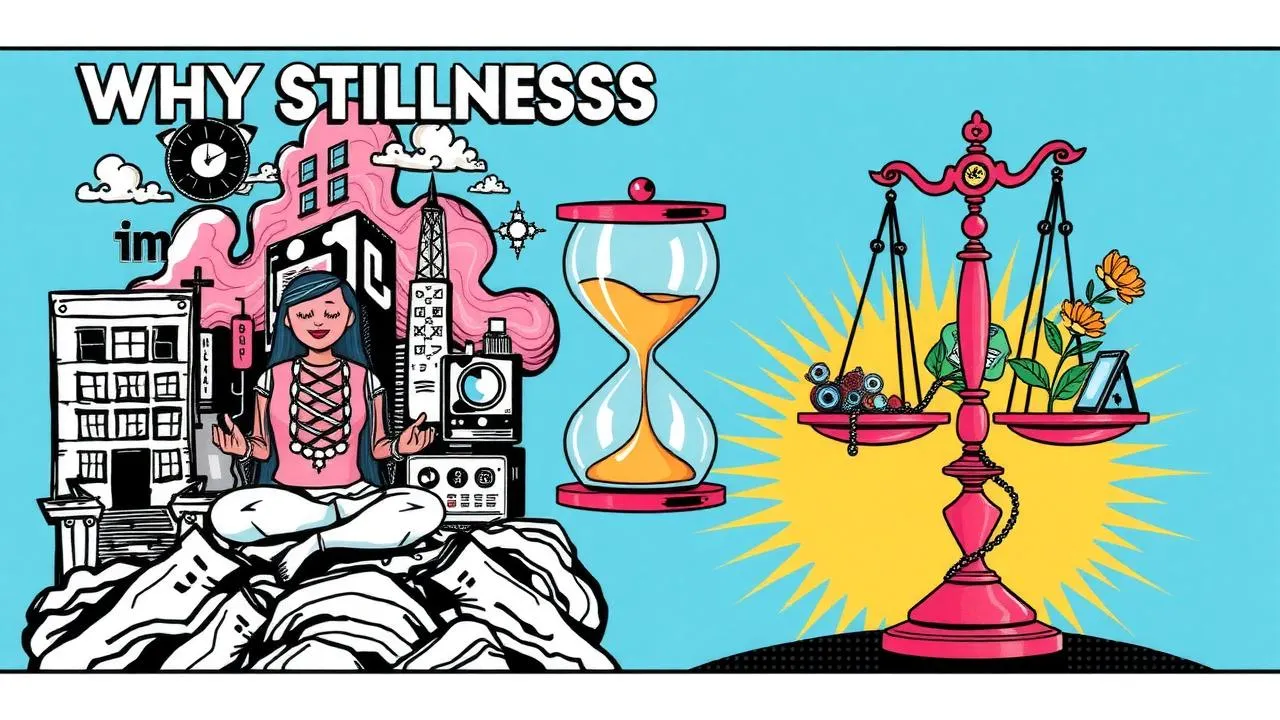
In today’s fast-paced world, stillness is more important than we might think.
It involves concentration, a focused attention that keeps distractions away, and tranquility, a calmness that helps the mind relax physically and mentally.
While mindfulness gets most of the attention, research shows that concentration and tranquility are different but essential for reducing stress and emotional distress.
In fact, tranquility alone can predict lower stress over time better than mindfulness does.
These qualities help us stabilize our thoughts and emotions, making it easier to face daily challenges without feeling overwhelmed.
Practicing stillness can give us balance, peace, and better mental health amid modern life’s constant rush.

- Jewelry Gifts for Women – Add personalization to gifts for your loved ones. This birthstone crystal necklace comes with an elegant white, silver-embossed jewelry box, making it an ideal present for mom, wife, sister, and girlfriend.
- Delicate Fashion Jewelry Gift that Fits – This woman’s necklace is adorned with a 0.75 x 0.88-inch emerald green birthstone crystal for May. They are rhodium plated and designed with an 18-inch chain plus 2-inch extender, and a lobster claw clasp.
- Strict Safety Standards – These birthstone charms and love gifts meet rigid safety standards. Our jewelry collections pass European 1907/2006 REACH Regulation Annex XVII Item 23,27, and 63, and are lead free, nickel free, and allergy free.All of our jewelry products are polished by hand.
- Crystal Necklace for Ladies Like You – Honor your inner royalty with this unique crystal heart pendant necklace. Presented by M3iss New York – Nicole Kulovany, this heart necklace is a regal, symbolic statement piece that unveils your feminine spirit.
- Thoughtful Gifts for Women – Looking for exceptional Mother’s Day, birthday, anniversary, holiday, and Valentine’s Day gifts for your wife, mom, sister, daughter, or friends? Each Leafael necklace is stored in an elegant white, silver-embossed gift box and gift bag, making it an ideal ladies necklace for the special women in your life.
Last update on 2026-10-24 / Affiliate links / Images from Amazon Product Advertising API
Understanding Stillness: Concentration and Tranquility Defined

Stillness is more than just quietness; it involves two key psychological qualities: concentration and tranquility. Concentration means focusing your mind on one task or object, shutting out distractions and holding your attention steady.
Tranquility, on the other hand, is the peaceful calmness that often comes with concentration, where the mind feels relaxed and balanced.
While these qualities often show up alongside mindfulness, the open, nonjudgmental awareness of the present moment, they are distinct.
Concentration requires sustained mental effort to keep your focus narrow, while tranquility reflects a gentle, relaxed state that helps lower stress and agitation.
You don’t need to be meditating formally to experience either; both can arise in everyday life, helping your mind stay steady and calm.
Research even shows that concentration and tranquility can be measured separately and play unique roles in mental well-being, sometimes explaining stress reduction better than mindfulness alone.
Understanding these differences helps us see stillness not just as being mindful but as a deeper balance of focused energy and peaceful calm, a balance that’s vital for thriving in today’s busy world.
How Concentration Anchors the Mind Amid Distractions
Concentration works like a mental anchor, keeping your attention steady on what matters most amid the constant buzz of distractions around us.
When you concentrate, your mind filters out irrelevant noise, reducing wandering thoughts and mental clutter. This focused attention not only improves how well you perform tasks but also brings clarity to your thinking.
It’s tied closely to attentional control, which helps you manage distractions more effectively rather than being pulled in multiple directions.
For example, when you’re deeply focused on a project, you’re less likely to get sidetracked by notifications or background noise, allowing you to engage more fully and with greater mental stability.
The good news is concentration can be strengthened through practice, like concentrative meditation, where you train your mind to stay with a single point of focus.
As concentration improves, people often notice they feel less irritable and stressed because their thoughts become more regulated and less chaotic.
This mental steadiness also helps manage emotional responses by stabilizing patterns of thinking, making it easier to stay calm even when faced with challenges.
Over time, practicing concentration can boost your cognitive flexibility, helping you adapt to new information without feeling overwhelmed, and it reduces mental fatigue by preventing your mind from constantly jumping around.
In a world full of distractions, cultivating concentration offers a powerful way to anchor your mind, bringing balance and a deeper connection to the moments that matter.
Tranquility’s Role in Creating Calm and Relaxation
Tranquility is that peaceful feeling inside when the mind settles, and tension melts away. It’s more than just a quiet moment; it brings real physiological relaxation that helps lower the body’s stress responses.
Unlike mindfulness, which focuses on awareness, tranquility directly predicts improvements in mental health over time by acting as a cushion against emotional ups and downs.
For many people who don’t meditate, finding tranquility is easier than achieving deep concentration or mindfulness, making it a practical way to ease daily stress. This calm state gently releases mental agitation and tension, creating space for emotional balance and recovery.
When life throws challenges our way, that tranquil quality builds resilience, helping us stay steady rather than reactive. People who cultivate tranquility often notice better sleep and less anxiety, showing how this calmness supports both mind and body.
Simply put, tranquility is a quiet power that shapes calm, relaxation, and lasting well-being in our busy world.

- Phoenix Symbolism: This elegant bracelet features a phoenix design representing rebirth, renewal, and transformation, making it a meaningful accessory that embodies strength and resilience through life’s challenges
- Unique Gift for Women: Presented in an elegant jewelry box, this crystal bracelet is ready to gift the moment it arrives. Thoughtfully made for the special women in your life—ideal for Christmas, birthdays, anniversaries, Valentine’s Day, or Mother’s Day. A radiant jewelry choice for every celebration, big or small
- Comfort Adjustable Slider Fit: Equipped with a smooth sliding chain for effortless size adjustment, perfectly fitting all wrist sizes without complicated clasps. All metal components are lead-free, nickel-free and hypoallergenic, compliant with Swiss SGS testing standards
- Premium Austrian Crystals: Crafted with premium Austrian crystals, this bracelet sparkles with brilliant clarity and exceptional shine, adding a touch of luxury and sophistication to any outfit. This timeless piece transitions seamlessly from casual daywear to elegant evening attire, serving as both a lucky charm and a stylish statement piece that elevates any look, day or night
- Hassle-Free After-Sales Guarantee: Your happiness matters as much as the sparkle. We proudly stand behind every piece of jewelry we craft—if you’re not completely satisfied, our dedicated support team is ready to assist within 24 hours. Backed by a 30-day satisfaction guarantee, we offer easy returns or exchanges with no questions asked. Because this gift is meant to bring joy, not worries
Last update on 2026-10-24 / Affiliate links / Images from Amazon Product Advertising API
Mindfulness Versus Stillness: What Sets Them Apart
Mindfulness and stillness are often talked about together, but they actually refer to different mental states that complement each other.
Mindfulness is about being aware of whatever is happening in the present moment without judging it. It’s an open, alert kind of awareness that takes in experiences as they unfold. Stillness, on the other hand, is made up of concentration and tranquility.
Concentration narrows your focus to a single point, helping to keep distractions away. Tranquility adds a deep sense of calm and relaxation, which is a softer, more peaceful feeling than the alertness mindfulness brings.
Research shows that concentration and tranquility explain extra benefits in reducing stress and psychological distress beyond what mindfulness alone offers. For example, tranquility has been found to predict lower stress over time, even when mindfulness does not.
This suggests that while mindfulness keeps you aware, stillness prepares the mind to be steady and calm enough to truly benefit from that awareness.
Without stillness, mindfulness might miss out on these powerful calming and focusing effects.
Think of mindfulness as the open window that lets you see clearly, and stillness as the stable frame that keeps the window from shaking in the wind.
Training in stillness practices like concentration exercises or calming meditation enhances mindfulness training, making it more effective.
By understanding how mindfulness differs from stillness, we can better design mental health approaches that address both awareness and inner calm, giving us stronger tools to handle the fast pace of modern life.
Measuring Concentration and Tranquility in Daily Life
To truly appreciate the role of stillness in our busy lives, it helps to have practical ways to measure it.
Recently, two brief scales were developed to assess ordinary levels of concentration and tranquility, each made up of just four items. These scales have proven reliable, with strong internal consistency (alpha values of 0.80 for concentration and 0.75 for tranquility), and they capture close to half of the variation in these states.
What makes these tools exciting is their simplicity and accessibility; they can be used easily with people who don’t meditate, offering a window into how stillness naturally shows up in everyday settings.
Scores on these scales align well with attentional control and mindfulness, which means they’re tapping into meaningful aspects of mental focus and calm.
On the flip side, higher scores correspond with lower irritability, less perceived stress, and reduced psychological distress, highlighting their real-world relevance. Importantly, these measures hold up over time, showing consistent results when tested again, making them reliable for tracking progress or changes.
Researchers and practitioners can use these scales not only to quantify stillness but also to differentiate concentration and tranquility from mindfulness, which is often mixed together in studies.
For example, while mindfulness involves open, nonjudgmental awareness, concentration zeroes in on sustained attention, and tranquility brings a soothing calmness to the mind.
By using these scales regularly, individuals and therapists can get a clearer picture of which aspects of stillness might need more attention, helping tailor strategies to improve mental balance.
Imagine checking in with these brief assessments as part of a daily routine, guiding personalized practices that foster a steadier, calmer mind amid the constant noise of modern life.
| Measure | Number of Items | Cronbach’s Alpha | Variance Explained (%) | Correlation Highlights |
|---|---|---|---|---|
| Concentration Scale | 4 | 0.80 | 49.8 | Correlates positively with attentional control (r=0.58) and negatively with perceived stress (r=-0.41) |
| Tranquility Scale | 4 | 0.75 | 44.6 | Correlates positively with mindfulness (r=0.64) and negatively with psychological distress (r=-0.47) |
The Link Between Stillness and Reduced Stress Levels
Stillness, through concentration and tranquility, plays a powerful role in lowering stress. While mindfulness helps us stay aware of the present, it’s concentration and tranquility that add something unique.
Concentration, the ability to focus the mind steadily, reduces stress beyond what mindfulness alone can do by about 6 to 8 percent.
Tranquility, the deep calmness of the mind that often follows, goes even further, explaining nearly 18 to 19 percent more of stress reduction.
When both are considered together, mindfulness’s direct impact on stress fades, showing how essential these qualities of stillness really are.
Tranquility isn’t just a nice feeling; it physically relaxes the nervous system, helping the body bounce back faster from stressful moments.
For example, someone who feels calm and centered is less likely to be overwhelmed by racing thoughts or emotional reactions.
Instead, their mind settles, reducing mental clutter and improving focus. Studies show that people with higher baseline tranquility report less stress even two weeks later, highlighting its lasting effect.
By calming the nervous system, stillness lowers the body’s fight-or-flight response, making it easier to handle daily pressures. This improved regulation means fewer spikes of anxiety or tension.
Practicing stillness can also enhance attentional control, helping us resist distractions and maintain a balanced outlook. When combined with other stress management methods, such as exercise or therapy, cultivating stillness offers a valuable boost.
Whether through brief moments of focused breathing or quiet reflection, embracing stillness helps us find a steady ground amid the chaos of modern life.

- Celtic Moon & Heart Design: Capture night sky magic with our Celtic Moon Necklace. Blending timeless symbols and radiant shimmer, this elegant piece is crafted for romantic souls—an unforgettable gift to treasure your unique bond
- Symbolic Birthstone Heart: The eye-catching heart-shaped birthstone shines brilliantly against the intricate moon. You can choose from a variety of birthstone colors, turning it into a personalized and meaningful exclusive gift
- Hypoallergenic And Safe: Birthstone necklace for women made with 14K white gold plating over, and hypoallergenic comfort, with delicate cubic zirconia accents symbolizing eternal light
- Meaningful Birthday Gift for Her: Comes in an elegant box. A perfect romantic gift to say “I love you to the moon and back” for birthdays, anniversaries, Valentine’s Day, or Mother’s Day for your wife, girlfriend, mom, or daughter
- Excellent Service: Every piece of jewelry represents a story and the feelings at the time, making your beautiful memories. Please contact us if you have any problems with our products. We will offer the best service
Last update on 2026-10-24 / Affiliate links / Images from Amazon Product Advertising API
Why Tranquility Predicts Better Mental Health Over Time
Tranquility, a calm and relaxed state of mind, plays a powerful role in improving mental health over time.
Unlike mindfulness or concentration alone, tranquility uniquely predicts lower stress levels even weeks later, making it a key factor in long-term well-being.
When your mind is tranquil, it’s less likely to react impulsively to stress, which allows for healthier emotional processing and reduces the cycle of worry and rumination that often worsens anxiety.
This calmness also supports physiological relaxation, which helps the body recover from daily pressures and builds resilience. For example, even people new to meditation can often cultivate tranquility more quickly than intense concentration, making it an accessible tool for managing stress.
Regular experiences of tranquility create a stable emotional baseline, smoothing out mood swings and fostering a balanced outlook on life.
By monitoring feelings of tranquility, individuals can spot early signs of mental health improvement, offering a simple yet effective way to track progress.
In our fast-paced world, embracing tranquility provides a gentle but strong foundation for mental health that goes beyond just paying attention or being mindful moment to moment.
How Concentration and Tranquility Support Emotional Balance
Concentration helps steady our thought patterns, making emotions less volatile and easier to manage. When the mind is focused, it becomes less reactive to distractions or emotional ups and downs.
Tranquility adds another layer by calming the body’s stress responses, lowering the intensity of emotions like anxiety or anger. Together, they create a foundation where emotional responses become more regulated and less impulsive.
Practicing stillness encourages nonattachment, which means we don’t cling tightly to feelings or push them away, allowing emotions to flow without rigid reactions.
This improved attention control also helps us notice emotional triggers earlier, giving us space to respond thoughtfully instead of reacting on impulse. When calmness takes hold, irritability and psychological distress naturally decrease, making it easier to return to emotional balance after setbacks.
Over time, these qualities build psychological flexibility, supporting healthier relationships and social interactions by promoting patience and understanding.
For example, someone who regularly cultivates stillness might find themselves less overwhelmed by frustration during a difficult conversation, responding with more calm and clarity instead of anger.
This balance is key in navigating the fast pace and emotional challenges of modern life.
Stillness Practices That Boost Attentional Control
Stillness practices like concentrative meditation, often called samatha, are powerful tools for training the mind to focus.
By gently guiding attention to a single point, such as the breath or a repeating mantra, these practices build the mind’s ability to sustain concentration even when distractions arise.
Over time, regular practice reduces the tendency for mind wandering and mental chatter, promoting cognitive flexibility and allowing us to shift attention smoothly between tasks.
This steady focus also encourages letting go of unnecessary mental proliferation, which supports a calmer, more stable mind.
These benefits don’t just stay on the cushion; improved attentional control supports mindfulness in daily life, making it easier to stay present and engaged.
Even brief daily sessions can enhance concentration and tranquility, which helps reduce stress and anxiety responses.
Many mindfulness-based programs now include stillness training because it strengthens mental resilience, helping people manage the fast pace of modern life with greater ease and clarity.
The Science Behind Concentrative Meditation and Mindfulness
Concentrative meditation and mindfulness are two powerful practices that shape the mind in unique yet complementary ways.
Concentrative meditation trains the mind to focus on a single point of attention, helping build one-pointedness and calmness.
This focused attention strengthens brain networks responsible for sustaining attention and reduces the tendency to get distracted. On the other hand, mindfulness meditation encourages open, nonjudgmental awareness of whatever arises in the present moment.
Instead of narrowing attention, mindfulness broadens it to include thoughts, feelings, and sensations with acceptance. Research shows these approaches develop different mental strengths: concentration sharpens focus and mental stability, while mindfulness enhances awareness and emotional regulation.
Neuroimaging studies back this up, revealing changes in brain regions tied to attention control and emotion management after practicing these meditations.
Both reduce stress and psychological distress, but through distinct mechanisms: concentration by stabilizing mental energy and mindfulness by fostering a balanced, nonreactive mindset.
Interestingly, stillness elements like concentration and tranquility prepare the ground for mindfulness to work more deeply.
When combined, these practices can maximize mental health benefits, making it easier to stay grounded in a hectic world.
Scientific evidence now supports integrating both concentration and mindfulness into mental health programs, showing that cultivating stillness is not just a calming experience but a way to build lasting resilience and emotional balance.

- Compass Design – “I’d be lost without you,” you are my compass. This compass birthstone necklace will remind you to enjoy the journey as you wander, dream, and reach for your goals. An ideal gift, it is a unique way to send her your blessings.
- Size & Material – Compass pendant height:24 mm/0.94 inches. The chain is 18 inches with a 2-inch extender. Crafted from high-quality 14k gold plated, the chain and pendant offer durability and a sleek, polished finish, nickel-free, lead-free and hypoallergenic.
- 12 Colors of Birthstones for 12 Months – The 14k gold plated compass birthstone necklace makes a perfect gift for women. Garnet stone for Jan, Amethyst for Feb, Aquamarine for March, Imitation Diamond for Apr, Emerald for May, Moonstone for June, Ruby for July, Peridot for Aug, Sapphire for Sept, Opal for Oct, Citrine for Nov, Turquoise for Dec.
- Meaningful Gifts for Women – This is a fashion compass birthstone necklace gift suitable for mothers, sisters, daughters, nieces, aunts, grandmothers, friends, and any other loved ones you know, or as a special treat for yourself! It will be the perfect gift for Birthday, Mother’s day, Christmas, Anniversary, New Year, Valentine’s day, Wedding, Thanksgiving or any special day.
- Customer Service – Backed by a 10-year experience in 14K gold plated jewelry manufacturing, Surcha delivers quality you can rely on. If there is any problem with our product or service, please feel free to contact us, we do our best for help.
Last update on 2026-10-24 / Affiliate links / Images from Amazon Product Advertising API
Integrating Stillness Into Mindfulness Programs
Stillness is made up of two key qualities: concentration and tranquility, which work hand in hand with mindfulness but serve unique roles.
Concentration is about focusing your attention sharply and steadily on one point, helping to steady the mind and block out distractions.
Tranquility is the calm, peaceful state of mind that naturally follows, supporting emotional balance and easing stress. Together, these qualities create an ideal mental space where mindfulness, being present and aware without judgment, can truly flourish.
Research shows that concentration and tranquility aren’t just theoretical ideas; they can be measured reliably in everyday life and have been proven to reduce stress and psychological distress even more than mindfulness alone.
Adding stillness components to mindfulness programs helps quiet the mental chatter and sharpens attentional control, making it easier to stay grounded in the moment.
To do this effectively, programs should explicitly teach concentration and tranquility skills, often through concentrative meditation techniques like samatha, which focus on steadying the mind and cultivating calmness.
Including tools that measure these qualities can also track progress and clarify outcomes.
When stillness is woven into mindfulness practice, participants often experience better stress management, more flexible thinking, emotional steadiness, and improved sleep, all of which are crucial for balancing the fast pace of modern life.
Practical Ways to Cultivate Stillness in a Busy World
Finding moments of stillness amid today’s hectic pace can feel tough, but small, consistent steps make a big difference.
Start by setting aside just a few minutes daily for focused attention exercises, like simple breath awareness, to calm the nervous system and gently build your concentration. Instead of juggling multiple tasks, try fully focusing on one thing at a time; this helps train one-pointedness and reduces mental overload.
Incorporating brief pauses or micro-breaks throughout your day can reset your mind’s calm, preventing stress from piling up. Guided concentrative meditations, which emphasize focusing on a single object, are especially helpful for strengthening mental stability.
If sitting still feels challenging, mindful walking or slow movement practices offer accessible ways to nurture both concentration and tranquility.
When possible, create a quiet, distraction-free space to support your stillness practice; even a corner of a room can work wonders.
Journaling about moments when you notice calm or steadiness can deepen your awareness and reinforce these states.
Remember, patience and consistency are key; stillness develops gradually with regular practice.
And while technology can sometimes distract, using mindful apps or reminders thoughtfully can support and track your progress without adding noise.
These simple steps help weave stillness into daily life, bringing balance and calm into our fast-moving world.
- Encourage setting aside short daily periods for focused attention exercises to build concentration gradually.
- Use simple breath awareness practices to promote tranquility and calm the nervous system.
- Advise reducing multitasking by focusing fully on one task at a time to strengthen one-pointedness.
- Incorporate brief pauses or micro-breaks during the day to reset mental calmness and prevent overload.
- Recommend guided concentrative meditations that emphasize single-object focus to develop mental stability.
- Suggest mindful walking or slow movement practices as accessible ways to cultivate both concentration and tranquility.
- Advocate for creating a quiet, distraction-free environment to support stillness practices when possible.
- Introduce journaling or reflection focused on noticing moments of calm and mental steadiness throughout the day.
- Highlight the importance of patience and consistency, acknowledging that stillness develops gradually with regular practice.
- Encourage use of technology mindfully, such as apps or reminders, to support and track stillness practice without becoming another source of distraction.

- Design: Phoenix symbolizes rebirth and eternity, and is also representative of hope, brighten up your life with these gorgeous women earrings, just like the rising Phoenix
- Unique Gift for Women: A small gift carries heavy love. These crystal earrings are beautifully packaged with a jewelry box and ready for gift giving, makes a surprise for any awesome lady, suitable for women on Christmas, Birthday, Anniversary, Valentine’s Day, Mother’s Day, etc
- Premium Materials: Crafted with high-quality crystals from Austria, these dangle earrings feature brilliant sparkle and exceptional clarity that catches the light beautifully
- Symbolic Meaning: The Phoenix design represents luck and renewal, making these earrings a meaningful accessory that carries positive symbolism and inspiration
- Complete Packaging: Each pair of earrings comes in an elegant jewelry box, ensuring safe storage and presentation-ready packaging for gifting occasions
Last update on 2026-10-24 / Affiliate links / Images from Amazon Product Advertising API
Frequently Asked Questions
1. Why is stillness important in today’s busy life?
Stillness helps calm our mind and reduce stress. In a world full of constant noise and activity, taking moments of quiet can improve focus and mental clarity, helping us feel more balanced and in control.
2. How can practicing stillness improve mental health?
Practicing stillness can lower anxiety and increase mindfulness. When we pause and breathe deeply, it helps slow down racing thoughts, promoting relaxation and better emotional regulation, which supports overall mental well-being.
3. What are simple ways to find stillness during a hectic day?
You can find stillness by taking short breaks to breathe deeply, sitting quietly for a few minutes, or stepping outside for some fresh air. Even brief moments of quiet can make a big difference in resetting your energy and focus.
4. Is stillness the same as meditation, or are they different?
Stillness isn’t exactly the same as meditation, though they’re closely related. Stillness means simply being calm and quiet, while meditation usually involves focused attention or specific techniques. Both help reduce stress, but stillness can be experienced anytime without any special practice.
5. How does finding balance through stillness affect our overall productivity?
Finding balance with stillness helps prevent burnout and improves concentration. When we regularly pause to rest our minds, we can approach tasks with clearer thinking and more energy, which often leads to better decision-making and higher productivity.
Stillness, made up of concentration and tranquility, plays a key role in balancing mental health in today’s busy world. Concentration keeps the mind focused amid distractions, while tranquility brings a calm, relaxed state that helps reduce stress.
Though often linked to mindfulness, concentration and tranquility are unique qualities that strengthen emotional balance and lower psychological distress.
Research shows these two aspects can predict better mental health beyond mindfulness alone, especially tranquility in the short term.
By intentionally practicing stillness through meditation and daily habits, we can improve attentional control, reduce stress, and foster resilience.
Adding concentration and tranquility into mindfulness programs can make these practices even more effective and supportive of well-being in modern life.


