
Dealing With Frustration Without Losing Your Mind

We’ve all been there. You’re more than a little bothered that things aren’t going your way.
Maybe they only have one checkout line open at the grocery store, or you’re so steamed that you can’t seem to sink a putt outside two feet.
Perhaps you’re maddeningly close to achieving a goal but can’t quite get there.
It almost seems like people and life are conspiring to test our ability to deal with frustration. It’s enough to make you feel like you might lose your mind.
Everyone sometimes feels this way, but there are ways to deal with this frustration that are healthier for us and those around us.
Keep your sanity and tame your frustration with these strategies:
Ask yourself why you’re frustrated. In general, frustration is not getting what you want. What are you trying to accomplish, or what do you want from someone else?
The first step is to notice that you’re frustrated.
The second step is to figure out why.
Take a break. If your frustration is getting the best, taking a break and disengaging can be helpful. Find something to do that you enjoy and find distracting.

- IMPROVES MENTAL HEALTH: Use this journal to improve mindfulness, uncover triggers, track physical and emotional sensations, document your worries, evaluate evidence for and against your automatic thoughts and ultimately walk away, in control, with more constructive ways of thinking.
- PERFECTLY DISCREET: Finally a wellness journal that doesn’t spell out “worry” or “anxiety” on the cover. This sleek journal looks beautiful on your bedside table, in the office, or wherever you may take it.
- BACKED BY RESEARCH: The exercise in this journal is backed by Cognitive Behavioral Therapists who use these prompts in their own work to help clients learn how to own their thoughts to overcome anxiety and reduce stress.
- HABIT BUILDING: This therapy journal features repetitive worksheets featuring the same journal prompts designed to enhance your mental resilience against anxious thoughts (anti anxiety). With consistent use, this exercise will naturally integrate into your daily routine.
- TAKE ON THE GO: It’s best to use this journal whenever anxiety strikes which is why we created it in a size that’s perfect to travel with (5-7/8″ x 8-1/4”). With the professional cover and convenient diary size, you’ll be mastering your thoughts in no time.
Last update on 2026-10-13 / Affiliate links / Images from Amazon Product Advertising API
A good movie or lunch with a friend can be an effective option.
List 10 ways you can spend a short or long break.
Do something physical. Exercise can give you a new perspective and a great way to burn excess energy. Go out for a quick run or do some callisthenics. Use your muscles and get your heart pumping.
Hitting a punching bag might be therapeutic under the circumstances.
Figure out what’s standing in your way.
What is the obstacle?
Is it a lack of skill on your part?
Are you waiting for someone else to do something?
Is it even something you can control?
If something is beyond your control, why work yourself into a frenzy?
If there’s something you can do to manage the obstacle, do it.
Work on your attitude. A positive attitude can help. A frustrated and annoyed attitude never helped anything. Address your attitude and adopt an attitude that will help the situation.
A poor attitude is likely to create more challenges than it solves.
Consider your attitude in the situation.
Make a plan. Maybe you need a new approach. Think about a better way to achieve your objective. What can you do better or differently? Come up with a plan and execute it.
If that doesn’t work, make a new plan and try that. Keep going until you’ve succeeded.
Try out new plans if the ones you’re using aren’t working.
Relax. It might be the perfect time for prayer, deep breathing, yoga, or meditation. Maybe a little easy-listening music is in order.
Spend regular time doing an activity that relaxes and calms you.
Find something that you can do that is relaxing and calming.
Frustration can be a positive sign. There’s an upside to frustration. It means that you think you should be doing something differently.
The trick is to use your frustration to fuel your efforts rather than using it as an excuse to give up.
Frustration can drive you mad if you let it. Examine your feelings and determine if there’s a solution you can implement.

- CULTIVATE HAPPINESS THROUGH JOURNALING – This 6-month journal for women with prompts is designed to help you practice gratitude, explore your thoughts and feelings, and boost self-awareness to feel happier every day.
- PRACTICE DAILY GRATITUDE TO STAY POSITIVE – Begin each day by writing down three things you’re grateful for in your daily positivity journal to recognize the good in your life and set a positive tone for the day ahead.
- DELVE DEEPER WITH NEW QUESTIONS DAILY – Each day, the positive journal offers a unique question and a reflection prompt to explore different areas of your life and find new, meaningful ways to cultivate happiness and reduce stress and negativity.
- STICKERS, USER GUIDE & PREMIUM QUALITY – This daily affirmation journal for women measures 5.8×8.3 inches, and has an eco-leather hardcover, thick 120gsm paper, lay-flat binding, pen loop, elastic band, ribbon bookmark, stickers, and user guide.
- 60-DAY GUARANTEE – We will exchange or refund your self esteem journal for women if you aren’t satisfied with positive affirmations book with daily positive quotes. Reach out to us to refund positive notebook with daily positive affirmations.
Last update on 2026-10-13 / Affiliate links / Images from Amazon Product Advertising API
Sometimes, there’s nothing you can do about a frustrating situation. In that case, the best you can do is to manage your emotional state.
When a solution exists, calm yourself and put it into action.
Relaxation techniques can be very helpful.
Also, frustration can be a positive sign that you’re about to make a breakthrough, so bear with it, get past it, and see what’s waiting on the other side for you!
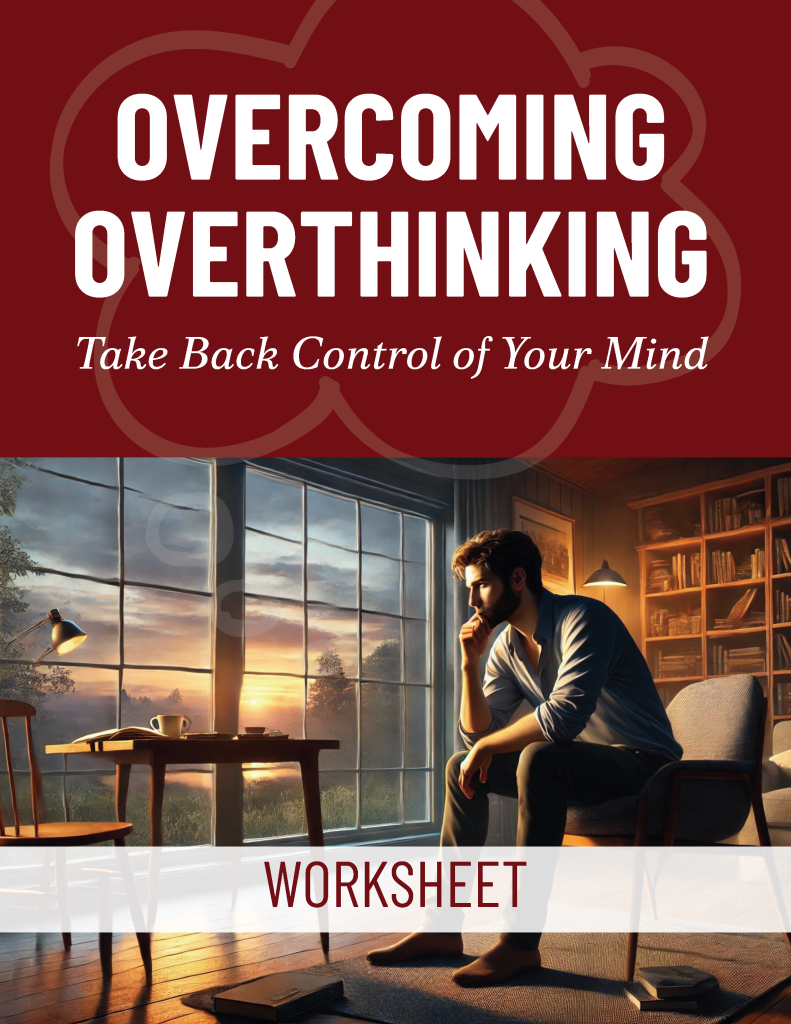
Overcoming Overthinking Worksheet Journal
- What are some common signs of overthinking?
- How can overthinking affect your relationships with others?
- What’s the difference between overthinking and OCD?
- How does worrying differ from overthinking?
- Can you explain the distinction between thorough planning and overthinking?
- What are the two main categories of overthinking?
- How can overthinking lead to depression and anxiety?
- What impact does overthinking have on decision-making?
- Can overthinking cause you to miss out on opportunities?
- How does overthinking contribute to blowing problems out of proportion?
- What is the relationship between overthinking and mental disorders?
- How can anxiety or stress trigger overthinking?
- Can the fear of failure cause overthinking? In what way?
- How does perfectionism contribute to overthinking?
- What role do trauma or past experiences play in overthinking?
- How can a lack of confidence lead to overthinking?
- Can overthinking become a habit?
- How does the desire for control relate to overthinking?
- What is the first step in overcoming overthinking?
- How can a thought log help with overthinking?
- What are cognitive distortions?
- Can you explain all-or-nothing thinking as a cognitive distortion?
- What is overgeneralization, and how does it relate to overthinking?
- How does mental filtering contribute to overthinking?
- Can you define mind reading in the context of cognitive distortions?
- What is catastrophizing, and how does it impact overthinking?
- How do “should” statements contribute to overthinking?
- What is labeling and how does it relate to negative thinking patterns?
- Can you explain personalization as a cognitive distortion?
- How does emotional reasoning affect our thought patterns?
- What is reality testing, and how can it help challenge negative thoughts?
- Can you provide examples of questions to ask yourself during reality testing?
- How can seeking alternative perspectives help reduce overthinking?
- What is evidence-seeking, and how does it challenge automatic thoughts?
- Can practicing gratitude help combat overthinking? How?
- What are some simple ways to practice gratitude?
- How can seeking support from others help with overthinking?
- In what ways can therapy or counseling be beneficial for managing overthinking?
- What is the connection between overthinking and low self-esteem?
- How can working on self-esteem help break free from negative thought patterns?
- Why is distracting your brain sometimes the best way to beat overthinking?
- How can prayer and meditation help stop overthinking?
- What is cognitive restructuring?
- Can you outline the steps involved in cognitive restructuring?
- How does self-acceptance relate to overthinking?
- What is the importance of focusing on the present moment to combat overthinking?
- How can deep breathing exercises help with overthinking?
- When is making a firm decision necessary to stop overthinking?
- What are the key things to remember when trying to overcome overthinking?
- Why is it important to be patient with yourself when trying to overcome overthinking?